After the Storm · Documentary
After the Storm
A documentary essay from Hatteras, six weeks after a Category 3.
· Hatteras Island, North Carolina · 14 min read
Hurricane Lila came ashore at Hatteras on the morning of December 14, 2025, as a strong Category 3 with sustained winds of one hundred and twenty miles an hour. The eye crossed the island and the back side of the storm pushed a six-foot surge across NC-12 for almost twelve hours. The pictures that went out on the wires that week were the usual: aerial shots of houses in the surf, drone footage of the road washed out, a single church steeple that survived. I went down six weeks later because I wanted to make a different kind of picture.
Six weeks is a particular interval. The federal money has been promised but not arrived. The insurance adjusters are still coming through. The first wave of out-of-state contractors has come and mostly gone. What is left is the slow, unglamorous work of repair: a couple hundred people on the island who are trying to put their houses back on their stilts before the next hurricane season, which starts on June 1.
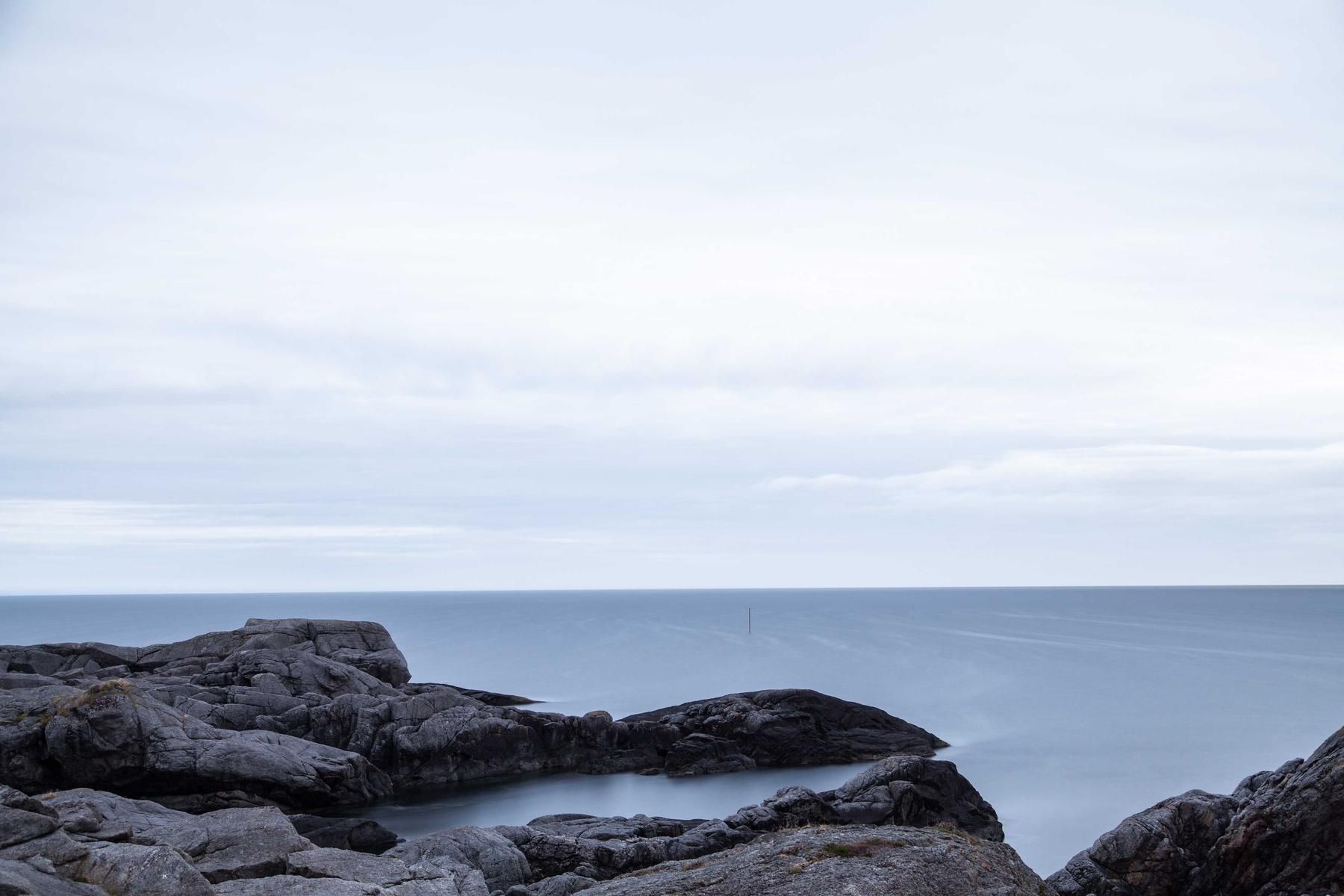
I shot the whole assignment on black-and-white film. Color would have been wrong — the light in late January on Hatteras is a clear, flat, blue-gray that color film over-corrects, and besides, the work I wanted to show was happening in the bones of the houses. The texture mattered more than the color. I used a Pentax 67 with a 55mm lens for the wide architectural frames and a Mamiya 7 II with the 80mm for the portraits. Both cameras hate sand, and both cameras came home with a lot of sand in them.
“Color would have been wrong. The work I wanted to show was happening in the bones of the houses.”
The conversation I had over and over again, in slightly different forms, was about whether it was worth rebuilding at all. Hatteras lost roughly two hundred and fifty homes to Lila, on an island that has fewer than five thousand year-round residents. Many of the houses that survived have been on the same stilts for forty or fifty years, and many of them will not survive the next storm. The federal flood maps were updated in 2024 and the insurance is no longer affordable for some of the families who have been there for generations. A few have left for the mainland; most are staying. The reasons people gave were not the ones I expected.
The most common reason was the simplest one. The land had been in the family for four generations, or six, and the children were going to inherit it whether or not the house was standing. Better to be the one who rebuilt it than the one who walked away. Mrs. Beasley, who lives in a house her grandfather built in 1948, said it the most plainly. "We have a saying down here," she told me. "The storm is not the worst thing that can happen to you. The worst thing is being the one who quit."
I will go back in the late summer, just before the height of hurricane season, to make the second half of this essay. The frames here are from a single week in late January. I owe a tremendous thank-you to the Midgett family, who let me sleep in their guest room for four nights and would not accept payment for it.
Filed under documentary · part of After the Storm.
Read next
More from the journal
Iceland: Long Light · Landscape
The Long Light
In May the sun on Heimaey barely sets. It crosses the horizon, dims for an hour, and starts climbing again. Two weeks of that light changed how I expose for shadows for the rest of the year.
· 12 min read
Quiet Mornings · Landscape
Quiet Mornings
Twenty mornings between November and February, twenty short walks at the edge of the same forest. A small landscape series about staying in one place long enough to see it change.
· 7 min read